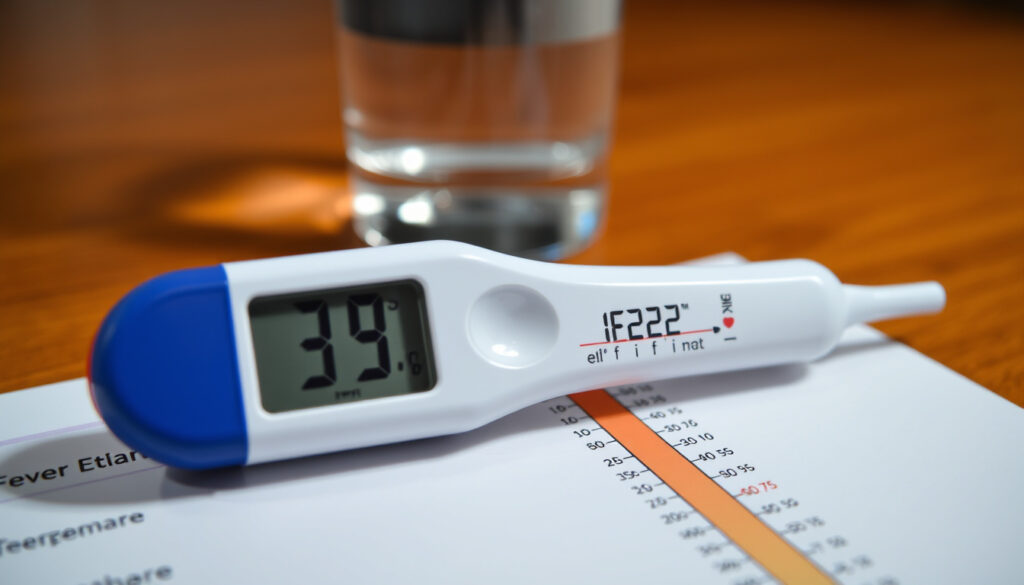
39 Celsius to Fahrenheit: Fever Chart & Conversion Guide
You’ve got a thermometer reading 39°C and need to know what that is in Fahrenheit — and whether it signals trouble. The math is simple: 39°C equals 102.2°F, a number that sits at the boundary between a moderate and high fever for most adults. This guide walks through the exact conversion, what that temperature means for different ages, and when a reading like this warrants a call to the doctor.
39°C to °F: 102.2°F ·
Normal body temperature: 97–99°F (36.1–37.2°C) ·
Fever threshold for adults: ≥100.4°F (≥38°C) ·
Convert C to F formula: (°C × 9/5) + 32 ·
Survivable core temp upper limit: ~104°F (40°C) with medical risk
Quick snapshot
- 39°C = 102.2°F (exact formula) (RapidTables conversion tool)
- Fever defined as ≥38°C (100.4°F) by multiple health authorities (Harvard Health fever guideline)
- 40°C core temp can cause heat stroke and organ damage (NASA AFRC temperature chart)
- Exact survivable duration at 40°C varies by individual health and environment (Cleveland Clinic fever overview)
- Fever medication effectiveness differs per person (Scribd fever summary)
- Conversion formula (°C × 9/5 + 32) remains constant; no recent changes (NFC Academy conversion chart)
- NASA temperature chart documents 39°C = 102.2°F as a standard reference (NASA AFRC Weather conversion chart)
- Check fever symptoms: if temperature persists above 102.2°F, monitor for additional signs (Scribd high fever note)
- Use a reliable thermometer and record multiple readings over 24 hours (NFC Academy conversion chart)
The following table summarizes the critical temperature thresholds.
| Label | Value |
|---|---|
| 39°C in Fahrenheit | 102.2°F |
| Normal body temperature range | 97–99°F (36.1–37.2°C) |
| Fever definition (adults) | ≥100.4°F (38°C) |
| High fever alert level | ≥103.1°F (39.5°C) |
| Survivable core temp limit | ~104°F (40°C) with medical intervention |
Is 39°C in Fahrenheit a fever?
Yes — 39°C (102.2°F) is well above the standard fever threshold for adults, which starts at 38°C (100.4°F). According to RapidTables conversion tool (temperature reference), the formula gives the exact Fahrenheit equivalent, and the same page confirms the adult fever benchmark.
Adult fever threshold according to Harvard Health
- Harvard Health Publishing (U.S. medical school faculty) defines fever as a temporary increase in body temperature, often due to an illness. For adults, a reading of 100.4°F (38°C) or higher signals a fever.
- A 39°C reading (102.2°F) falls into the moderate-to-high fever category, especially if it persists beyond 24 hours.
Fever range for children and infants
- For children older than 3 months, a temperature of 102.2°F (39°C) is considered high and may warrant a call to the pediatrician, especially if accompanied by other symptoms.
- For infants under 3 months, any fever above 100.4°F (38°C) requires immediate medical attention — 102.2°F is a clear emergency signal. (HSE Ireland fever guideline)
39°C qualifies as a fever for all ages. Adults should monitor for additional symptoms; infants under 3 months need immediate care. The conversion itself is exact, but the clinical context is what matters.
“Adult fever threshold typically starts at 38°C (100.4°F). A reading of 39°C (102.2°F) places you solidly in fever territory, and it’s wise to monitor for additional symptoms.”
“39°C (102.2°F) indicates high fever in adults. If accompanied by severe headache, shortness of breath, or confusion, seek medical attention promptly.”
The implication: While the conversion is straightforward, the threshold for medical concern depends on age and accompanying symptoms.
How do you convert 39°C to Fahrenheit step by step?
The conversion is straightforward: multiply the Celsius temperature by 9/5 (or 1.8), then add 32. Here’s the arithmetic laid out step by step, verified against RapidTables’ conversion table and NASA AFRC Weather conversion chart (government aerospace research center).
Celsius to Fahrenheit formula explained
- Start with the Celsius value: 39°C.
- Multiply by 9/5 (or 1.8): 39 × 1.8 = 70.2.
- Add 32 to the result: 70.2 + 32 = 102.2.
- The final temperature is 102.2°F.
To double-check: use the alternative formula (°C × 9)/5 + 32. (39 × 9) = 351; 351 ÷ 5 = 70.2; +32 = 102.2°F. Both methods yield the same result.
Quick conversion chart for common temperatures
The table below shows the relationship between Celsius and Fahrenheit for key reference points, including body temperature and fever thresholds. Data sourced from NFC Academy educational conversion chart and Tomoe Valve USA industrial conversion table.
| °C | °F | Context |
|---|---|---|
| 36.0 | 96.8 | Low normal body temp |
| 37.0 | 98.6 | Average body temperature |
| 38.0 | 100.4 | Fever threshold (adults) |
| 39.0 | 102.2 | Moderate to high fever |
| 40.0 | 104.0 | High fever, medical risk |
| 41.0 | 105.8 | Very high fever — emergency |
When should you worry about a 39°C fever?
A temperature of 39°C (102.2°F) is a clear fever, but whether it becomes dangerous depends on age, duration, and accompanying symptoms. Medical guidelines from reputable sources help draw the line.
Signs to seek medical help for adults
- Fever that persists for more than 3 days.
- Temperature climbing above 103.1°F (39.5°C).
- Severe headache, stiff neck, confusion, or difficulty breathing.
- Rash, repeated vomiting, or pain when urinating.
These indicators are drawn from Scribd’s summary of fever warning signs and align with guidance from the Health Service Executive (HSE) Ireland and the Cleveland Clinic.
High fever in babies and children: when to call a doctor
- Infants under 3 months: any rectal temperature of 100.4°F (38°C) or higher requires an immediate call to the doctor — 102.2°F is an emergency.
- Children 3 months to 3 years: a fever of 102.2°F (39°C) or higher, especially if the child is lethargic, irritable, or not drinking, warrants medical advice.
- All ages: if a fever is accompanied by a seizure, difficulty waking, rapid breathing, or a purple rash, seek emergency care immediately.
A 39°C fever by itself is not automatically dangerous for most healthy adults, but it is the body’s signal that something is off. When fever hits 103.1°F (39.5°C) or higher, or lasts more than 72 hours, the risk of complications rises — especially for older adults and those with chronic conditions.
The pattern: The margin between a manageable fever and a medical emergency is narrow, particularly for vulnerable populations.
Is 40 degrees Celsius survivable?
40°C (104°F) is a dangerous core temperature that can cause heat stroke, organ failure, and death if not treated promptly. Survival depends on how long the temperature remains elevated, the individual’s overall health, and whether intervention is available.
Human body temperature limits from recent studies
- A core temperature of 40°C (104°F) is considered the upper limit of human tolerance for brief periods. Prolonged exposure can lead to irreversible damage. (Cleveland Clinic fever overview)
- Research indicates that the threshold for heat stroke lies around 40.5°C (104.9°F) in a controlled environment, but individual factors such as hydration and age shift that number.
- Survival at 40°C is possible with rapid cooling, hydration, and medical care, but the risk of multi-organ failure increases with every degree above 40°C.
Heat stroke and organ failure risks
- At 40°C, the body’s cooling mechanisms (sweating, increased blood flow to skin) become overwhelmed.
- Organ failure can begin within 30 minutes of sustained core temperature above 40°C, per emergency medicine protocols.
- Elderly individuals, young children, and people with heart conditions are at highest risk.
40°C is survivable — but barely. The window between “high fever” and “medical emergency” is narrow. If you or someone else reaches 104°F, don’t wait: begin cooling measures and seek emergency care immediately.
What this means: For anyone reaching 40°C, immediate action is required; survival depends on rapid intervention.
What are the symptoms of a fever in adults?
Fever itself is a symptom, not a disease. Recognizing the full constellation of signs helps distinguish a mild illness from something more serious. The following list is based on Scribd’s fever symptom overview and Cleveland Clinic fever information.
Common fever causes and treatments
- Symptoms: sweating, chills, headache, muscle aches, loss of appetite, dehydration, weakness.
- Causes: bacterial or viral infections (common cold, flu, urinary tract infections), heat exhaustion, inflammatory conditions like rheumatoid arthritis, and some medications.
- First-line treatments: rest, hydration (water, electrolyte solutions), over-the-counter fever reducers (acetaminophen or ibuprofen) if temperature is above 101°F (38.3°C) and causing discomfort.
When to monitor vs. when to treat
- Monitor: if fever is below 102°F (38.9°C) and you have no other serious symptoms, rest and fluids are usually enough. Check temperature every 4–6 hours.
- Treat: if fever reaches 102°F or higher, use medication as directed, and keep a log of temperatures. Seek medical help if it stays high for more than 48 hours.
- Seek emergency care: if fever exceeds 104°F (40°C), or is accompanied by severe headache, stiff neck, confusion, chest pain, or trouble breathing.
Confirmed facts
- 39°C = 102.2°F (mathematically exact) (NASA conversion chart)
- Fever defined as ≥38°C (100.4°F) by multiple health authorities (Harvard Health guideline)
- 40°C core temp can cause heat stroke and organ damage (Cleveland Clinic overview)
What’s unclear
- Exact survivable duration at 40°C varies by individual health and environment (HSE Ireland)
- Fever medication effectiveness differs per person (Scribd summary)
“The conversion chart from NASA AFRC Weather confirms 39°C = 102.2°F. The formula remains the gold standard for temperature conversion.”
NASA AFRC Weather — official temperature conversion chart
“For infants under three months, any fever above 100.4°F (38°C) is an emergency. At 102.2°F (39°C), immediate medical evaluation is required.”
HSE Ireland — pediatric fever guidelines
For anyone tracking a 39°C reading, the conversion to 102.2°F is exact, and the medical threshold is clear: this is a fever that warrants attention. Adults should rest, hydrate, and monitor for additional symptoms; for infants under three months, immediate medical care is non-negotiable. The line between manageable fever and dangerous heat stress is thin — and knowing when to act is the difference between a quick recovery and a trip to the emergency room. For parents and caregivers, having a conversion chart and a fever action plan ready can save precious minutes when every degree matters.
Frequently asked questions
What does 39°C feel like in Fahrenheit?
It’s the same temperature — 39°C equals 102.2°F. In practice, that level typically feels very warm to the touch, and you may experience chills or sweating as your body tries to regulate.
Is 39°C a high fever for a 2-year-old?
Yes. For a 2-year-old, a temperature of 39°C (102.2°F) is considered a high fever. If it persists for more than 24 hours or is accompanied by vomiting, lethargy, or a rash, contact your pediatrician.
Can 39°C be normal after exercise?
It’s possible — intense physical activity can raise core temperature temporarily. However, 39°C is still above the normal body temperature range. If it doesn’t return to baseline within 30 minutes of rest and cooling, monitor for heat exhaustion.
How do I bring down a 102.2°F fever?
Start with over-the-counter fever reducers like acetaminophen or ibuprofen, drink plenty of fluids, and rest. Sponging with lukewarm water can help. If fever doesn’t drop within 24–48 hours, consult a doctor.
Does 39°C always mean infection?
No. While infection is the most common cause, fever can also result from heat exhaustion, inflammatory conditions, certain medications, and even emotional stress. A single reading of 39°C is not diagnostic on its own.
What temperature is too high for a baby in Celsius?
Any temperature above 38°C (100.4°F) in a baby under 3 months requires immediate medical attention. For older babies, temperatures above 39°C (102.2°F) warrant a call to the pediatrician, especially if accompanied by other symptoms.
More related posts
 Houses for Sale Grande Prairie – Current Listings and Prices
 All Inclusive Vacations from Toronto: Cheap Deals Guide
 How to Sharpen Kitchen Knives: Methods, Tips & Mistakes
 Highest Paid NHL Player – 2025 Top Salaries and Rankings
 Tono by Akira Back Toronto: Nikkei Rooftop Dining Guide
 Red Deer Election Results 2025: Mayor, Council, and Federal
 Vacant Home Tax Declaration 2025-2026: Toronto & Ireland
 Jang Ki-Yong – Korean Actor’s Career and Best Roles
