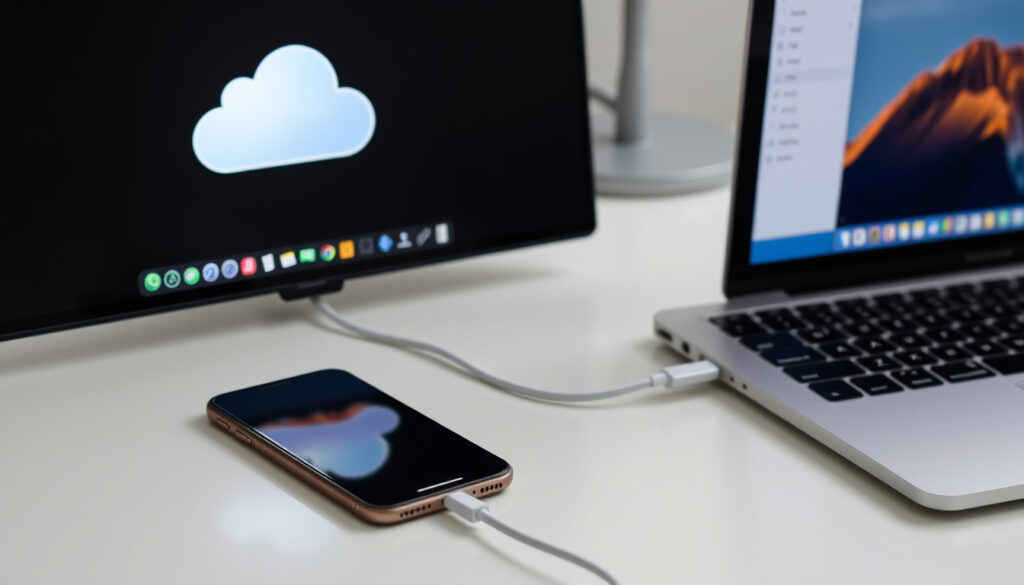
How to Backup iPhone: iCloud, Computer (Mac/PC) Guide
Unlocking a new iPhone only to watch it sit blank because your old backup vanished turns peace of mind into panic instantly. Backing up an iPhone feels simple until you discover how many ways there are to do it, and how much data can quietly fall through the cracks.
Default iCloud storage: 5 GB · Automatic iCloud backups: Daily on Wi-Fi and power · Computer backup requirement: USB cable or Wi-Fi · iCloud Backup exclusion: Messages with attachments
Quick snapshot
- iCloud backs up most settings and apps automatically (Apple Support documentation)
- iCloud always encrypts data in transit and at rest (Apple Support documentation)
- Finder (Mac) and iTunes (Windows) create full local backups of all device data (Apple Support documentation)
- Exact backup file size varies significantly by device content (Intego security analysis)
- Specific data sizes for typical iPhone backups across storage tiers (Apple Support documentation)
- Release date for the upcoming Apple Devices app on Windows (Intego security analysis)
- Finder replaced iTunes for Mac backups on October 7, 2019 (Intego security analysis)
- iCloud storage plans now reach up to 12TB, or 14TB with Apple One Premier (Apple Support documentation)
- Apple Devices app expected to replace iTunes for Windows backups (Intego security analysis)
- Use both iCloud and encrypted computer backups for redundancy before iOS updates (YouTube tech walkthrough)
- Check Settings > [device name] > iCloud > iCloud Backup to review your current backup status (Apple iPhone backup guide)
- iCloud+ plans start at $0.99/month for 50GB if you need more than the free 5GB allocation (Carbonite cloud backup comparison)
This key facts table summarizes the core specifications and behaviors across both backup methods.
| Label | Value |
|---|---|
| Primary methods | iCloud or computer |
| iCloud trigger | Wi-Fi and locked |
| Computer backup location | Finder or iTunes library |
| Backup encryption | Recommended for health data |
| Free iCloud storage | 5 GB |
| Encryption default | Off (computer backups) |
| Finder backup archiving | Archive multiple by date |
How do I backup my iPhone to my computer?
Apple offers two distinct paths for computer backups, depending on whether you’re on a Mac or a Windows PC. Both methods create a local copy of your data that’s completely under your control and can be encrypted for maximum privacy.
Backup to Mac with Finder
Since macOS Catalina launched in October 2019, Finder has handled all iOS device backups on Mac — iTunes quietly retired from this role. To back up your iPhone to a Mac:
- Connect your iPhone to the Mac using a USB cable
- Open Finder, select your device from the sidebar
- Under the General tab, click “Back Up Now”
- To enable encryption (recommended if you store health data or passwords), check “Encrypt local backup” before clicking that button — Finder will archive multiple dated backups by default (Intego security analysis)
- For wireless backups, enable Wi-Fi sync in Finder Options after the initial cable setup (Intego security analysis)
The pattern is straightforward: physical connection establishes trust, then optional wireless keeps backups running without reaching for a cable. Restoring from a Mac backup typically takes half an hour or less — considerably faster than pulling everything from iCloud over a network (Intego security analysis).
Backup to Windows PC with iTunes
Windows users still rely on iTunes for iPhone backups, though Apple has signaled that a dedicated Apple Devices app is in development. To back up using iTunes:
- Download and install iTunes from the Microsoft Store or Apple.com
- Connect your iPhone to the PC via USB
- Click the device icon in iTunes, then select “Back Up Now”
- Enable “Encrypt local backup” by checking the box — without a password, your backup lacks protection for sensitive data (Apple Support documentation)
Note that Windows iTunes backups do not support wireless sync — every backup requires the USB cable. This is a meaningful limitation compared to Finder’s Wi-Fi capabilities on Mac, though it’s a wired connection that many security-focused users actually prefer for the reduced attack surface.
If you enable encryption on a computer backup and then forget the password, your backup data becomes irrecoverable — Apple cannot reset it. Keep that password stored somewhere safe, or the backup you counted on for security becomes a liability instead.
How do I completely backup my iPhone without iCloud?
Some users prefer keeping their data entirely offline, whether due to privacy concerns, unreliable internet, or simply wanting total control over their backup files. Computer backups accomplish this by default — they copy everything on the device, not just the subset that iCloud handles.
Using Finder on Mac
Finder backups on Mac include all device data in a single local archive. Unlike iCloud backups, which exclude items already synced to iCloud (photos, messages, app data that’s been cloud-enabled), Finder captures the complete picture. This matters most when you’re planning to restore to a new device or need a forensic-level copy of everything on your phone.
The tradeoff: you’re responsible for managing storage space on your Mac, and the backup file grows with your device content. A 256GB iPhone can easily produce a 50–80GB backup file depending on what you’ve accumulated.
Using iTunes on Windows
iTunes on Windows creates identical full backups to those on Mac, capturing everything on the device without the partial exclusions that iCloud applies. For users who have decided against iCloud entirely, this is the most complete backup alternative Apple officially supports.
The implication: offline backups require no internet connection, no Apple ID authentication, and no ongoing subscription. Your backup lives on your hardware until you decide to delete it. The catch is that restoring requires physical access to that specific machine — if your Mac or PC fails, your backup goes with it.
One key difference to note is that iCloud is primarily a syncing service — deleted photos disappear from all your devices simultaneously, whereas a true backup preserves everything even after deletion. If you’re using iCloud for convenience, it pays to understand that it doesn’t function like a traditional backup in that respect.
Is it better to backup your iPhone to iCloud or your computer?
This question doesn’t have a universal answer — it depends on how you use your devices, how much data you’re protecting, and how much control you want over the process. Here’s how the core dimensions compare.
iCloud delivers convenience with a catch: you’re limited to 5GB of free storage, and once iCloud fills up, Apple disables features until you manage space. Computer backups sidestep this entirely — your only limit is the free disk space on your machine. For users with large photo libraries or extensive app data, that storage ceiling can become a real constraint within weeks.
The following table breaks down how iCloud and computer backups compare across the dimensions that matter most.
| Criteria | iCloud Backup | Computer Backup |
|---|---|---|
| Storage included | 5 GB free; paid plans from $0.99/month | Unlimited (hard drive space only) |
| Backup frequency | Automatic daily when locked, charging, on Wi-Fi | Manual (you control timing) |
| Accessibility | Anywhere with Wi-Fi connection | Requires physical access to that computer |
| Encryption | Always encrypted end-to-end | Optional; off by default |
| Backup versioning | Overwrites latest only | Archive multiple backups by date (Finder) |
| Restore speed | Hours depending on connection | 30 minutes or less (wired) |
| Data included | Most settings and apps; excludes synced content | Complete device copy including all data |
The implication: iCloud works best for users who value set-and-forget protection and don’t mind paying for storage, while computer backups suit those who need complete archives and faster restores at the cost of manual management.
iCloud pros and cons
iCloud excels when you need protection without thinking about it. Once enabled, backups run silently every night as long as your iPhone is locked, plugged in, and on Wi-Fi — no action required. Your data stays accessible across any network connection, making it ideal for users who travel or work across multiple locations. Health data and Keychain items receive end-to-end encryption, and you can access backups from any browser or device (Apple Support documentation).
The downside is the storage limit and the partial nature of what’s backed up. iCloud Photos, iMessages already synced to iCloud, App Store content, and PDFs in Books are explicitly excluded from iCloud backups — meaning a full restore might not pick up everything you’ve accumulated. If you exceed your 5GB allocation, backup stops and features like iCloud Mail and iCloud Drive become read-only until you upgrade or free up space (Apple Support documentation).
Computer pros and cons
Computer backups offer unlimited storage (subject to your hard drive), complete data coverage, and faster restores. You can archive multiple backups by date using Finder on Mac, meaning you can roll back to a specific point in time rather than being stuck with only the most recent copy. Encrypted backups provide maximum privacy for sensitive data like health records and saved passwords (YouTube tech walkthrough).
The tradeoff is convenience. Computer backups require a physical or configured wireless connection to your specific machine, manual initiation, and active management of storage space. They’re also vulnerable to hardware failure — if your backup drive dies, you lose the archive along with it. For most users, the best practice is to use iCloud for daily automatic protection and encrypted computer backups periodically or before major iOS updates (YouTube tech walkthrough).
What does iCloud back up?
Understanding exactly what’s included — and what’s excluded — in an iCloud backup prevents nasty surprises when you restore to a new device and find gaps where you expected continuity.
Included data
- Device settings, wallpapers, and app configurations
- App data from apps that store information locally on the device
- Photos and videos if iCloud Photos is enabled (stored in full resolution in iCloud, optimized locally on your device)
- Ringtones and saved sounds
- Home screen organization and app arrangement
- Health data and Keychain (both end-to-end encrypted)
Apple’s official guidance recommends checking backup options in Settings > [your device name] > iCloud > iCloud Backup to see exactly what your current backup contains and how much space it’s using (Apple iPhone backup guide).
Excluded data
- iCloud Photos (managed separately through Photos settings)
- iMessages, SMS, and MMS messages already synced to iCloud
- App Store content, PDFs from Books, and other downloaded media
- Data synced from third-party accounts (Gmail, Outlook, etc.)
- Camera Roll content if iCloud Photos is enabled (excluded to avoid duplication)
The distinction between what iCloud backs up versus what’s simply synced creates real consequences. iCloud is a syncing service — changes propagate across all your devices immediately, and deletions do the same. This differs fundamentally from a true backup, where deleted items remain in the archive. Users who rely on iCloud for both syncing and backup purposes should understand this distinction to avoid data loss scenarios (Carbonite cloud backup comparison).
How can I backup my iPhone if I don’t have enough storage?
Running into iCloud storage limits is remarkably common — the free 5GB allocation fills up fast once your photo library and app data start accumulating. Apple provides several paths forward, ranging from quick fixes to more permanent solutions.
Temporary iCloud storage solutions
- Optimize iPhone Storage: Enable “Optimize iPhone Storage” in Photos settings — this keeps full-resolution originals in iCloud while storing lower-resolution versions locally, dramatically reducing your local storage footprint (YouTube iPhone storage guide)
- Remove old backups: If multiple devices share your iCloud, old backup archives may be consuming space. Delete outdated backups from Settings > iCloud > Manage Account Storage > Backups
- Offload unused apps: iOS can offload apps you don’t use while preserving data, freeing local space without losing configuration
- Purchase more iCloud: Plans start at $0.99/month for 50GB — enough for most users who aren’t backing up extensive video libraries
Offload to computer first
If iCloud storage is consistently full and you don’t want to pay for a subscription, shifting to computer backups sidesteps the constraint entirely. Connect your iPhone to a Mac or PC with sufficient free space, back up everything to local storage, then delete the iCloud backup to free up your plan. This approach works particularly well for users who back up infrequently and don’t need remote access to their archives.
iCloud storage up to 12TB is available directly through Apple, or 14TB when bundled with Apple One Premier for users with extensive media libraries and multiple devices to protect. Most single-device users find that the $2.99/month 200GB plan handles their needs comfortably, with room for backups and document sync without constant management.
When iCloud storage fills completely, Apple disables backup creation and restricts other iCloud features until space is freed. Set up storage alerts or review your allocation monthly if you’re hovering near capacity — the last thing you want is a failed backup the morning before a major iOS update.
What we know vs. what remains uncertain
Confirmed
- iCloud backs up most settings and apps automatically when conditions are met
- Finder (Mac) and iTunes (Windows) create complete local device backups
- Encryption on computer backups is optional and off by default
- iCloud always encrypts data end-to-end
- Finder allows archiving multiple backups by date
- Windows still uses iTunes; Apple Devices app is forthcoming
Uncertain
- Exact backup file sizes vary by device content — Apple doesn’t publish specific benchmarks
- The upcoming Apple Devices app for Windows has no confirmed release date
- Specific restore time benchmarks across different storage plan tiers
- How Apple handles beta iOS device backups officially
Expert perspectives
Tech Guide (YouTube)
Best practice — use iCloud for daily protection and encrypted local backups periodically.
Intego Security Expert
Restoring a backup from your Mac is considerably faster than restoring a backup from iCloud.
Carbonite Backup Provider
Technically safest: encrypted computer backup, which gives you local keys and password protection that no cloud service can override.
Tech Guide (YouTube)
Having both backups means you’re protected if one fails — iCloud catches day-to-day incidents while computer archives survive catastrophic scenarios.
For iPhone users, the choice between iCloud and computer backups isn’t binary. Each method covers different failure scenarios and serves different use patterns. iCloud handles the automatic daily protection that prevents data loss from routine incidents — a lost phone, an accidental deletion, a corrupted app. Computer backups protect against larger failures: hardware loss, subscription cancellation, or the need to restore everything quickly without waiting on network speeds. The implication: most users benefit from both, with iCloud as the daily safety net and encrypted computer backups as the periodic deep archive.
Related reading: Microsoft 365 Sign In: Official Login Guide & Steps · What Does Text Message RCS Mean – Features, Setup and Comparisons
After securing your iPhone data through iCloud or computer backup, you can easily restore iPhone from backuprestore iPhone from backup
Frequently asked questions
What is the fastest way to backup an iPhone?
Wired computer backups to a Mac or PC are significantly faster than iCloud — Finder or iTunes transfers typically complete in under 30 minutes for most devices, while iCloud restores can take hours depending on your connection speed and the amount of data being downloaded.
What is the easiest way to backup your iPhone?
iCloud backup is the easiest method — once enabled in Settings > iCloud > iCloud Backup, it runs automatically every night when your iPhone is locked, plugged in, and connected to Wi-Fi. No cable, no manual steps, no need to remember anything.
Will I lose anything if I backup my iPhone?
A backup itself doesn’t delete anything — it creates a copy of your data. However, if you’re switching to a new iPhone and restore from a computer backup, items not included in that backup (like messages already synced to iCloud) won’t transfer over. Always check what’s included in your chosen backup method before starting a restore.
Can I backup my entire phone?
Computer backups via Finder or iTunes create the most complete archive, capturing nearly everything on your device. iCloud backups include most settings and app data but exclude content already synced to iCloud (photos, messages, downloaded media). For true completeness, computer backups are the closest to a full device copy.
Will I lose everything if I stop paying iCloud storage?
If you cancel an iCloud+ paid plan, your account reverts to the free 5GB tier. Existing data exceeding 5GB remains but you cannot add new data, and features like iCloud Backup, iCloud Drive, and iCloud Photos become read-only. Your data isn’t deleted immediately — Apple provides grace periods and warnings — but you’ll be locked out of adding new content until you manage the storage.
How to backup iPhone to iCloud on computer?
You can’t trigger an iCloud backup directly from a computer — iCloud backups are device-initiated and run on your iPhone or iPad itself. To check or trigger an iCloud backup from a computer, you need to access iCloud.com in a browser, which lets you manage files and settings but not initiate device backups. For computer-controlled backups, use Finder (Mac) or iTunes (Windows) instead.
How to backup iPhone to iTunes?
On a Windows PC, download iTunes from Apple’s website or the Microsoft Store, install it, connect your iPhone via USB, click the device icon, and select “Back Up Now.” To protect sensitive data, check “Encrypt local backup” before clicking — and store that password securely, since Apple cannot recover it if forgotten.
More related posts
 Hyundai Santa Fe 2023: Reviews, Price, Problems & Reliability
 Criminal Minds Season 19: Release Date, Cast & FAQs
 Peter Hermann: Actor, Author, and Mariska Hargitay’s Husband
 Federal Reserve Interest Rates: Current Rate & Outlook
 GTA Online Weekly Update: Times, Bonuses & Latest News
 Best Niagara on the Lake Restaurants: Complete Guide
 Best French Bakeries Near Me: Authentic Boulangeries in Ireland
 Diane Keaton Net Worth at Death: $100M Fortune Details
