Trump Canada 51st State – Origins Facts and Trade Context
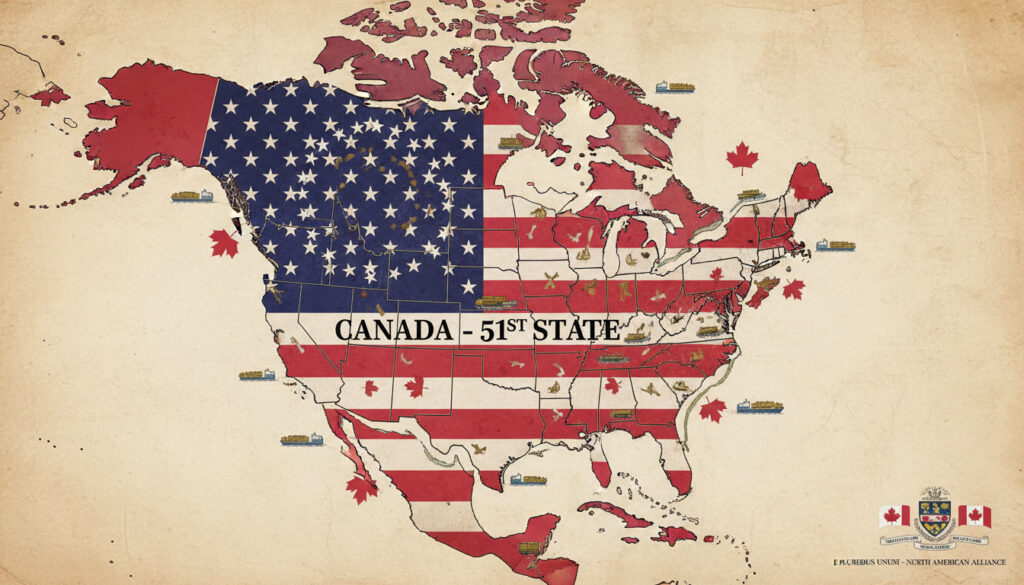
President Donald Trump has repeatedly suggested Canada could become the 51st U.S. state, transforming a diplomatic dinner joke into sustained political rhetoric that now dominates bilateral discussions. The comments, which began at Mar-a-Lago in late 2024, have evolved from dismissible banter into a central tension point in U.S.-Canada trade relations.
The annexation rhetoric intensified throughout early 2025, with Trump insisting Canadians would receive tax cuts and improved healthcare under American statehood. Canadian Prime Minister Justin Trudeau initially characterized these remarks as humorous, but later reassessed them as genuine geopolitical maneuvering connected to trade disputes and resource access.
This examination traces the origins of Trump’s statements, analyzes whether the proposals represent serious policy intent or strategic leverage, and documents Canada’s shifting response from amusement to alarm.
Did Trump Suggest Canada Become the 51st State?
Trump first raised the prospect during a dinner with Trudeau at Mar-a-Lago in late 2024, initially framed as lighthearted commentary. By January 2025, he articulated specific benefits he claimed would accrue to Canadians, including reduced taxation and enhanced medical coverage. The rhetoric escalated significantly by early February, when Trump suggested statehood was “100 percent certain” if Canada “played the game right.”
Key Insights
- The 51st-state concept first emerged during private discussions before entering public rally speeches.
- Trump has consistently framed annexation as economically beneficial rather than hostile takeover.
- The timing correlates directly with threatened punitive tariffs on Canadian imports.
- Canadian intelligence suggests the rhetoric targets access to critical mineral resources.
- Trump employed similar sovereignty challenges regarding Greenland and Denmark.
- Official Canadian position evolved from laughter to diplomatic concern within six weeks.
Verified Facts
| Date | Event | Source Type |
|---|---|---|
| Late 2024 | Initial mention at Mar-a-Lago dinner | Diplomatic reporting |
| January 2025 | North Carolina rally: Tax and healthcare claims | Rally transcript |
| February 3, 2025 | “Threshold of pain” statement between tariff calls | Official records |
| February 7, 2025 | Trudeau hot mic: “A real thing” | Video recording |
| Early February 2025 | Trudeau X post: “Snowball’s chance in hell” | Social media |
| Mid-February 2025 | Trudeau corrects to “54th state” as nonstarter | Press availability |
| Ongoing | 30-day tariff delay negotiated | Trade announcements |
| February 2025 | Business summit convened by Trudeau | Government schedule |
What Was the Context Behind Trump’s 51st State Comments?
The annexation rhetoric emerged against a backdrop of escalating trade tensions. Trump had threatened sweeping tariffs on Canadian goods, creating what Trudeau described as a dispute that “nearly exploded into an all-out trade war.” The 51st-state comments surfaced between phone calls negotiating these tariff implementations.
Trade Disputes and Tariff Threats
On February 3, 2025, between two calls with Trudeau regarding tariffs, Trump stated that statehood would be “100 percent certain” if Canada had the “threshold of pain” to endure the negotiation process. Trudeau later told MSNBC that he viewed the statehood rhetoric as a deliberate distraction from substantive trade issues.
The 51st-state remarks coincided with a “simmering trade dispute that nearly exploded into an all-out trade war before a last-minute deal to delay tariffs for 30 days,” according to Trudeau’s assessment of the timeline.
Critical Minerals and Resource Access
Trudeau suggested Trump’s motivation extended beyond political theater to resource acquisition. In his February 7 hot mic comments, Trudeau stated: “I suggest that not only does the Trump administration know how many critical minerals we have but that may be even why they keep talking about absorbing us and making us the 51st state.” Canada possesses significant deposits of rare earth elements and battery minerals essential for advanced manufacturing.
More related posts
 Vacant Home Tax Declaration 2025-2026: Toronto & Ireland
 TV Stand with Storage: Complete Buying Guide & Ideas
 How Much Money Is in the World – $100.1 Trillion in March 2026
 Star Wars Movies Order: Release vs Chronological Guide (2025)
 Justin Hartley Movies and TV Shows – Complete Filmography Guide
 What Causes Anxiety Symptoms – Biological, Psychological, Medical Triggers
 Au Coin du Vietnam Sherbrooke: Menu, Reviews & Delivery
 NHL Trade Deadline 2025: 24 Trades, 47 Players Moved
